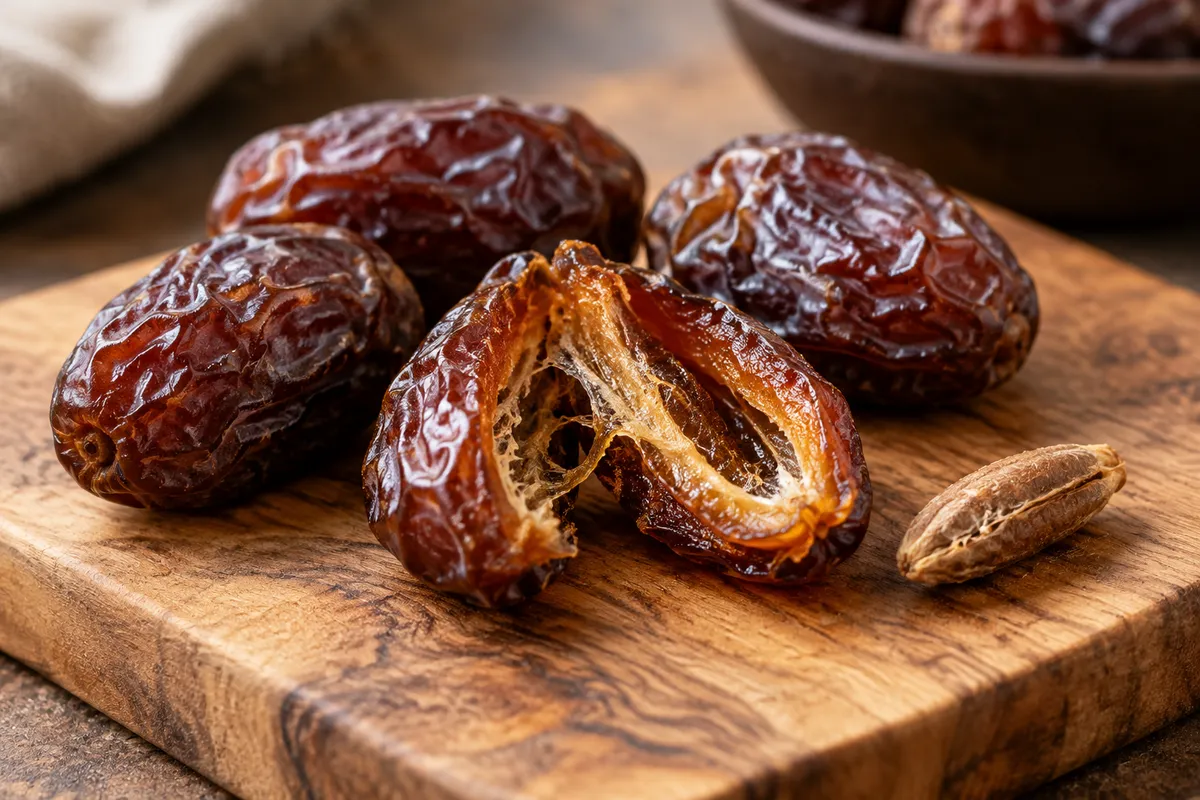
Medjool dates are a useful ingredient when you want sweetness and a soft, chewy texture. They can be eaten as they are or chopped into a dish. The first thing to learn is what is in the pack: whole or pitted dates, any added ingredients and the storage instructions. An appealing description on the front does not remove the need to check these practical details.
Start with the fruit you have bought
Date sizes vary, so a recipe written in numbers of dates can be less precise than one using weight. Check whether the stones are still inside. Split each whole date and remove the stone before chopping or blending; even pitted packs deserve a quick check. Softness varies too, which affects a paste or sauce. A dry, firm date and a very soft one may need different amounts of liquid. Follow a recipe that suits the texture instead of adding liquid without checking the result.
Choose a meal rather than endless grazing
A small amount chopped into porridge or a grain dish gives sweetness a clear role. Keeping a large open box beside your desk can make it harder to notice how much you eat. For dried dates, mealtimes are also a sensible choice for dental reasons. Pairing dates with other meal ingredients gives variety but does not cancel their sugar or energy. There is no need to make dates a compulsory food if you prefer something else.
A practical example
Add chopped dates to porridge near serving, alongside a suitable milk or alternative. Taste before adding another sweetener. A few pieces can give occasional sweetness throughout the bowl. Keep the rest of the meal familiar so that you can decide whether you enjoy the addition.
Try it this week
Weigh a small portion from your pack, remove stones and chop it. Use part in a meal you already enjoy, then decide whether the flavour and texture are worth repeating. This is a useful way to learn portion size without relying on photographs of much larger recipe servings.
- Do I need to remove stones?
- Is the recipe based on weight or a variable date count?
- Will the dates be part of a meal?
Keep the whole meal in view
A date-based recipe is still a recipe whose full ingredients and portion matter. Adding nuts, chocolate, syrup or oil changes the result, even when the main sweet ingredient is fruit. Enjoyment and nutritional usefulness can coexist without treating a dessert as medicine. You can use dates occasionally and still have a varied food routine, or decide that another fruit works better for your budget and taste.
A small serving does not need to become a daily target. These guides provide general adult food ideas, not a personalised diabetes plan or a prescription for children. If you have a condition affecting diet, swallowing or blood glucose, use advice tailored to you. Persistent symptoms should be assessed rather than attributed automatically to a particular food.
Make the choice repeatable
A useful food habit should work on an ordinary busy day as well as when you have time to cook. Keep the dates where you can remember them, but put the main pack away after taking the amount you plan to use. Notice which dishes you enjoy and which leave fruit unused.
You can repeat a successful idea without turning it into a daily obligation. If a recipe feels too sweet, reduce the amount before looking for another product. If it feels inconvenient, simplify the preparation. The best next change is the one that addresses the actual difficulty in your kitchen, rather than the newest nutrition trend.
Sources and further reading
Keep exploring
- Medjool dates nutrition: sugar, portions and the whole meal
- Medjool dates meal ideas: three ways to use a small amount
- Buying and storing Medjool dates without waste
- Medjool dates health claims: dental health and blood glucose
- Medjool date preparation: three simple recipe ideas
Keep exploring the practical questions.
Explore the guides