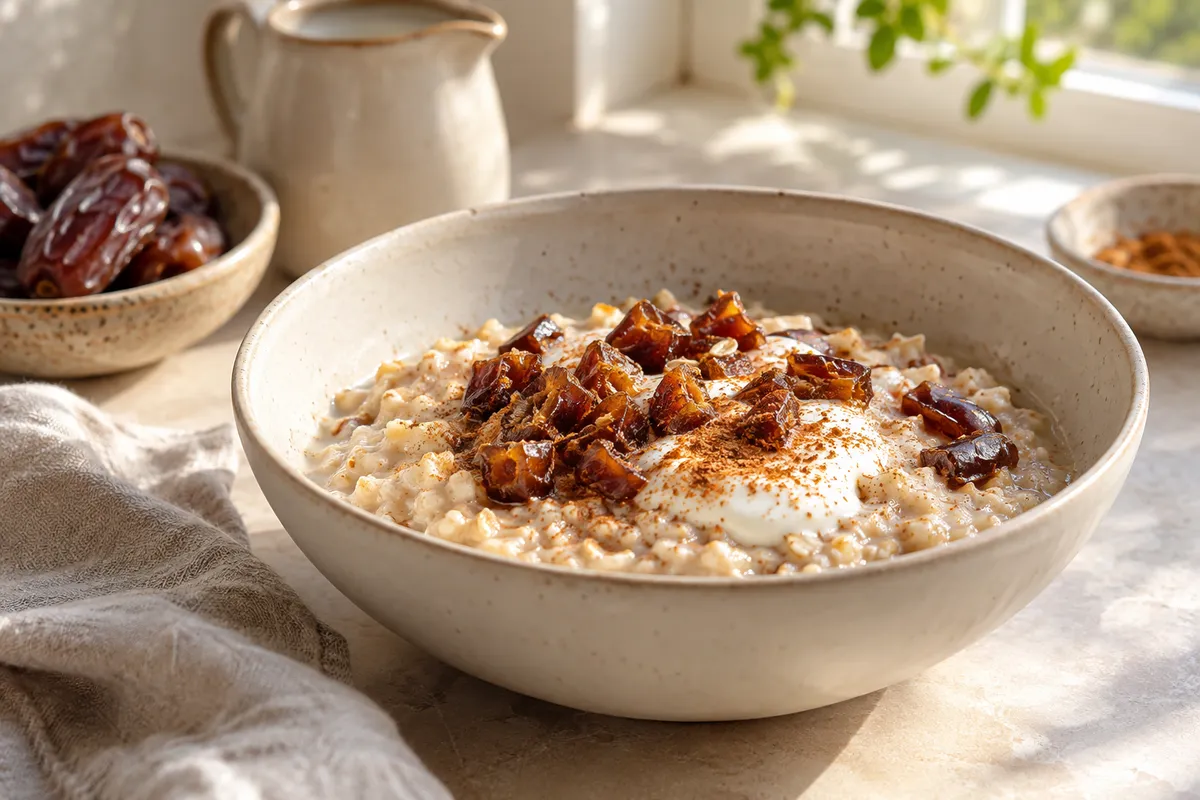
Planning dates into meals is easier than inventing a separate date-based diet. Begin with one sweet and one savoury use. Dates can soften sharp flavours and add chewiness, so a small amount can work in a dish that contains plenty of other ingredients. The aim is not to make every meal sweet or to replace fresh produce, vegetables and protein foods.
Breakfast and lunch ideas
At breakfast, add chopped dates to plain oats or yoghurt, using a small amount before deciding whether any extra sweetener is necessary. For lunch, combine pieces with a grain salad containing vegetables and a suitable protein, such as chickpeas. Lemon, herbs and crunchy vegetables can balance sweetness. Check that the meal is substantial enough for your appetite rather than expecting a garnish to do the work of lunch. People avoiding dairy can use suitable alternatives without needing an exact imitation.
A dinner or dessert role
A few chopped dates can add sweetness to a vegetable stew or tagine-style dish. Cook with the other ingredients and taste gradually, because dates can become very sweet in a reduced sauce. A simple dessert might combine a small amount with baked apple or a suitable plain yoghurt. Enjoy it with a meal if the dates are dried. These ideas are flavour combinations, not a claim that date recipes improve a particular condition.
A practical example
For a lunch bowl, use cooked grain, chickpeas, chopped cucumber, herbs, lemon and a few date pieces. Serve a quantity that suits your appetite. If the sweetness is too strong, reduce the dates rather than adding another expensive ingredient. The same general idea works with different grains and vegetables.
Try it this week
Choose one recipe and write down the number of servings before opening the pack. Reserve the measured date amount and put the rest away. Cook the dish as a normal meal with its other ingredients, then decide whether it needs fewer dates, a sharper flavour or a different texture next time.
- Does the date amount suit the whole batch?
- Have I included the other foods needed for a meal?
- Can I adjust flavour without adding more sweetness?
Keep the whole meal in view
A date-based recipe is still a recipe whose full ingredients and portion matter. Adding nuts, chocolate, syrup or oil changes the result, even when the main sweet ingredient is fruit. Enjoyment and nutritional usefulness can coexist without treating a dessert as medicine. You can use dates occasionally and still have a varied food routine, or decide that another fruit works better for your budget and taste.
A small serving does not need to become a daily target. These guides provide general adult food ideas, not a personalised diabetes plan or a prescription for children. If you have a condition affecting diet, swallowing or blood glucose, use advice tailored to you. Persistent symptoms should be assessed rather than attributed automatically to a particular food.
Make the choice repeatable
A useful food habit should work on an ordinary busy day as well as when you have time to cook. Keep the dates where you can remember them, but put the main pack away after taking the amount you plan to use. Notice which dishes you enjoy and which leave fruit unused.
You can repeat a successful idea without turning it into a daily obligation. If a recipe feels too sweet, reduce the amount before looking for another product. If it feels inconvenient, simplify the preparation. The best next change is the one that addresses the actual difficulty in your kitchen, rather than the newest nutrition trend.
Sources and further reading
Keep exploring
- Medjool dates explained: taste, portions and practical uses
- Medjool dates nutrition: sugar, portions and the whole meal
- Buying and storing Medjool dates without waste
- Medjool dates health claims: dental health and blood glucose
- Medjool date preparation: three simple recipe ideas
Keep exploring the practical questions.
Explore the guides