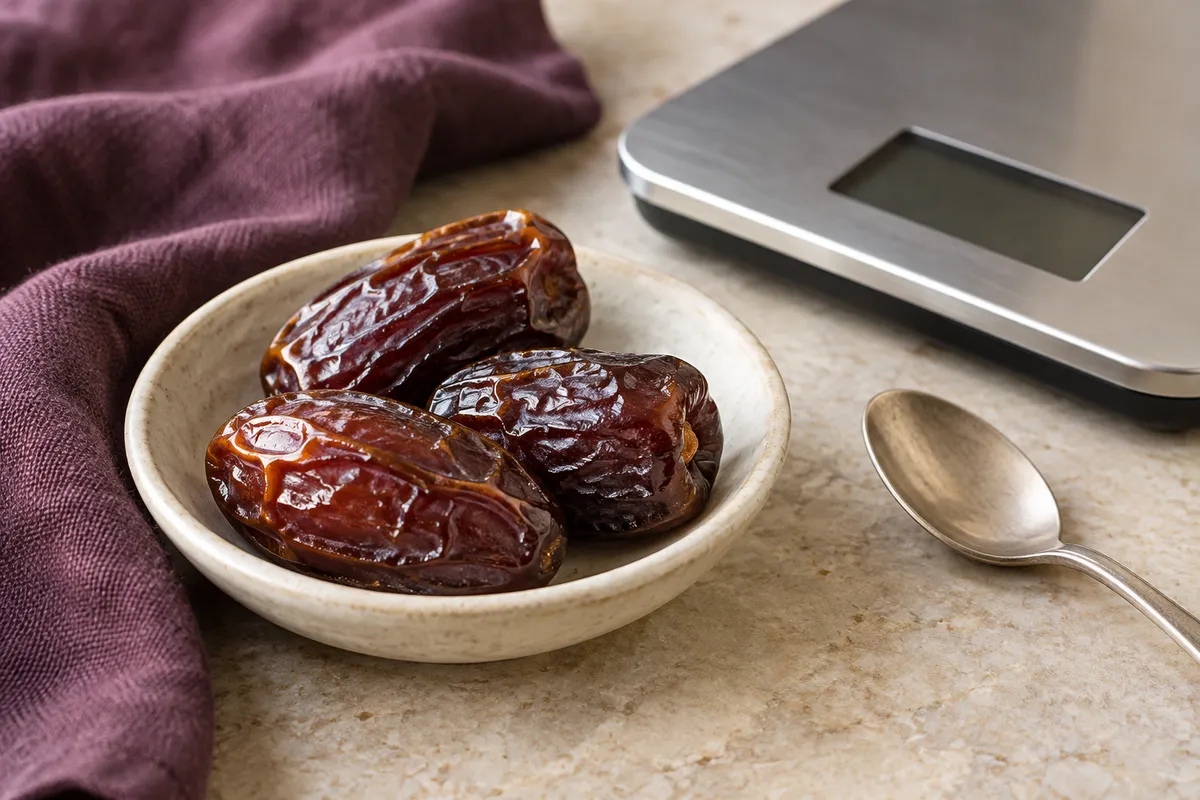
Food described as natural still has a nutritional profile. Dates contain sugars and food energy, and a small bowl can hold more than you expect because the fruit is concentrated compared with many fresh fruits. They also contribute other components of food, including fibre, but that does not make the amount eaten irrelevant. Use the pack’s nutrition table and a portion you understand rather than treating all dates as identical.
Weigh once to learn what a portion looks like
For dried fruit, the NHS uses around 30g as a general fruit portion guide. That is not a medical prescription, a required daily intake or a guarantee about blood glucose. Medjool dates are often large, and pack sizes and moisture differ. Weighing your own dates is more reliable than memorising a fixed count from an online picture. Once you know the approximate amount, you can make more deliberate decisions about recipes and serving bowls without measuring every meal forever.
Natural sweetness does not answer every question
A date can replace some of another sweet ingredient in a recipe, but the finished dish may still be a sweet, energy-dense food. Look at how much you use and what else is included. A date-and-nut bar, a sauce and a few chopped dates in oats have different roles. If you have diabetes, think about dates within your existing carbohydrate plan and ask for advice when needed. Avoid claims that a particular variety is automatically safe in unlimited amounts.
A practical example
A few chopped dates in a bowl of oats is different from a large bowl of dates eaten alone. A homemade dessert can be enjoyable without becoming an everyday nutrient requirement. Fresh fruit can offer another texture and amount of food when you want variety. No single fruit needs to provide everything.
Try it this week
Compare the per-100g information on your pack with the amount you actually intend to eat. If making a recipe, calculate how many servings the batch realistically provides before deciding whether the ingredient list looks modest. Small-looking balls or bars can be concentrated foods; their shape does not define a suitable portion.
- Have I considered the amount I actually eat?
- Is a recipe being mistaken for a therapeutic food?
- Does a medical nutrition plan need individual advice?
Keep the whole meal in view
A date-based recipe is still a recipe whose full ingredients and portion matter. Adding nuts, chocolate, syrup or oil changes the result, even when the main sweet ingredient is fruit. Enjoyment and nutritional usefulness can coexist without treating a dessert as medicine. You can use dates occasionally and still have a varied food routine, or decide that another fruit works better for your budget and taste.
A small serving does not need to become a daily target. These guides provide general adult food ideas, not a personalised diabetes plan or a prescription for children. If you have a condition affecting diet, swallowing or blood glucose, use advice tailored to you. Persistent symptoms should be assessed rather than attributed automatically to a particular food.
Make the choice repeatable
A useful food habit should work on an ordinary busy day as well as when you have time to cook. Keep the dates where you can remember them, but put the main pack away after taking the amount you plan to use. Notice which dishes you enjoy and which leave fruit unused.
You can repeat a successful idea without turning it into a daily obligation. If a recipe feels too sweet, reduce the amount before looking for another product. If it feels inconvenient, simplify the preparation. The best next change is the one that addresses the actual difficulty in your kitchen, rather than the newest nutrition trend.
Sources and further reading
Keep exploring
- Medjool dates explained: taste, portions and practical uses
- Medjool dates meal ideas: three ways to use a small amount
- Buying and storing Medjool dates without waste
- Medjool dates health claims: dental health and blood glucose
- Medjool date preparation: three simple recipe ideas
Keep exploring the practical questions.
Explore the guides