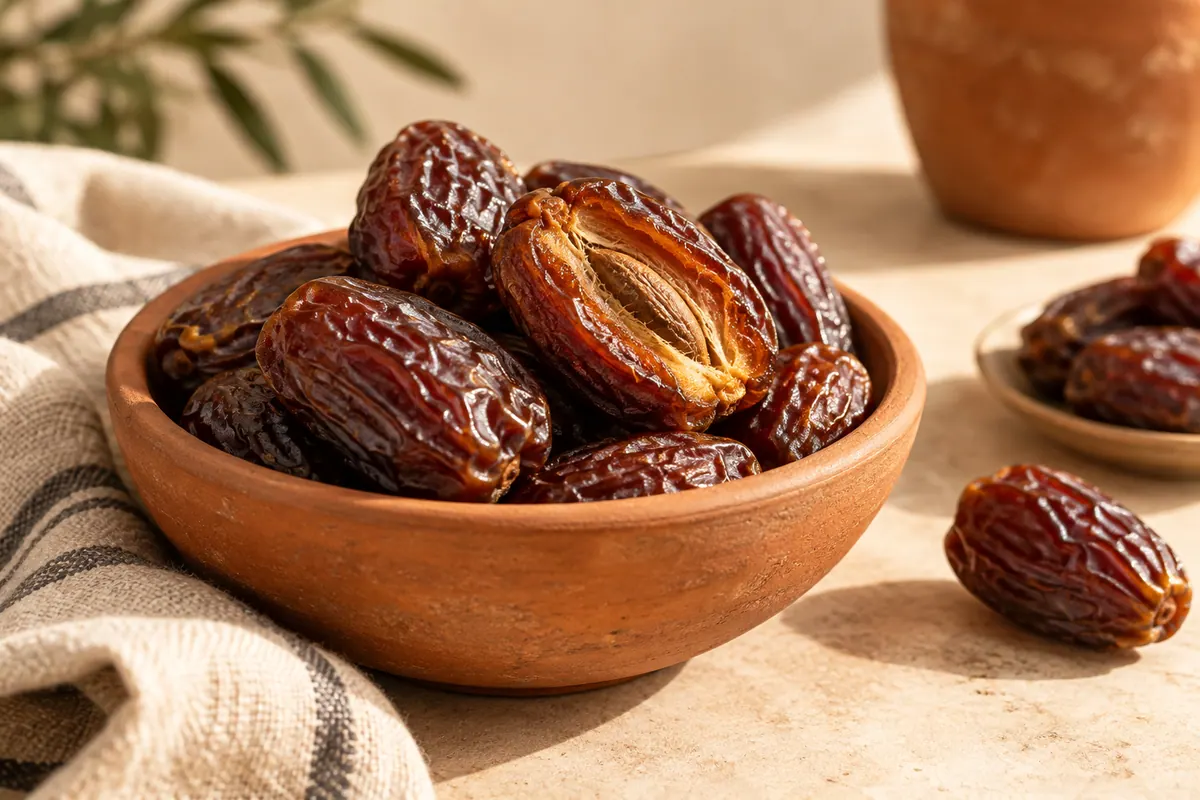
Dates are sometimes promoted as a solution for digestion, hormones, energy, pregnancy or weight management. A claim about one nutrient is not evidence that a food treats a condition. Much also depends on the amount eaten, the rest of the diet and the person involved. Enjoy dates for their taste and practical uses, while asking for direct evidence when a sales message moves into medical promises.
Consider when dried fruit is eaten
The NHS advises eating dried fruit with meals rather than repeatedly between meals because it can cling to teeth. Making a sticky date paste or a small bite-sized sweet does not remove the need to think about dental exposure. Regular dental care and the wider pattern of eating and drinking still matter. An occasional dessert eaten with a meal is a different habit from grazing on sticky fruit throughout the day. Choose a routine you can understand rather than labelling every natural sweet food tooth-friendly.
Respect individual blood-glucose needs
Dates contain carbohydrate and sugars. A natural-food label does not make them invisible to a diabetes plan. People can respond differently to foods and portions, and a general website cannot adjust medication or carbohydrate advice for an individual. Follow the plan agreed with your team and ask if you are unsure how a recipe fits. Avoid changing treatment because someone describes dates as balancing blood sugar or claims a particular variety bypasses normal nutrition concerns.
A practical example
A parent may decide to keep dried fruit within family mealtimes. Someone with diabetes may ask their dietitian how a weighed amount fits an agreed plan. Someone simply enjoying a date in a dessert does not need to frame the choice as a treatment. These situations deserve different decisions.
Try it this week
When you see a health claim, write down the promised outcome and check whether the source studied that exact food, amount and group of people. Testimonials cannot establish the same thing. If the question affects a pregnancy, a diagnosed condition or medicines, use a qualified professional rather than treating a recipe article as personalised advice.
- Is this a food idea or a medical promise?
- Is dried fruit being eaten with meals?
- Do individual needs change the portion or suitability?
Keep the whole meal in view
A date-based recipe is still a recipe whose full ingredients and portion matter. Adding nuts, chocolate, syrup or oil changes the result, even when the main sweet ingredient is fruit. Enjoyment and nutritional usefulness can coexist without treating a dessert as medicine. You can use dates occasionally and still have a varied food routine, or decide that another fruit works better for your budget and taste.
A small serving does not need to become a daily target. These guides provide general adult food ideas, not a personalised diabetes plan or a prescription for children. If you have a condition affecting diet, swallowing or blood glucose, use advice tailored to you. Persistent symptoms should be assessed rather than attributed automatically to a particular food.
Make the choice repeatable
A useful food habit should work on an ordinary busy day as well as when you have time to cook. Keep the dates where you can remember them, but put the main pack away after taking the amount you plan to use. Notice which dishes you enjoy and which leave fruit unused.
You can repeat a successful idea without turning it into a daily obligation. If a recipe feels too sweet, reduce the amount before looking for another product. If it feels inconvenient, simplify the preparation. The best next change is the one that addresses the actual difficulty in your kitchen, rather than the newest nutrition trend.
Sources and further reading
Keep exploring
- Medjool dates explained: taste, portions and practical uses
- Medjool dates nutrition: sugar, portions and the whole meal
- Medjool dates meal ideas: three ways to use a small amount
- Buying and storing Medjool dates without waste
- Medjool date preparation: three simple recipe ideas
Keep exploring the practical questions.
Explore the guides